Buyer's Guide
The fixture checklist and layout plan for a new convenience store or gas station, based on 200+ real convenience store buildouts.
Updated 2026-08-25 • 615 convenience stores and gas stations served since 2009 • By TX Store Fixtures
Opening a convenience store comes down to a short list of fixture decisions: gondola shelving for the aisles, a checkout counter, countertop glass display at the register, slatwall on the walls, and locking display cases for anything worth stealing. We have supplied 615 convenience stores and gas stations since 2009, and this guide is built from those invoices, not guesswork. A typical first fixture order, a qualifying buildout, is a mixture of 7 store fixture line items, and 57% of buildouts span exactly two store fixture families, usually gondola plus slatwall or countertop glass plus glass displays. Gondola is the biggest decision, so it gets its own convenience store gondola shelving page; here we summarize it so you can see how the rest of the floor fits around it.
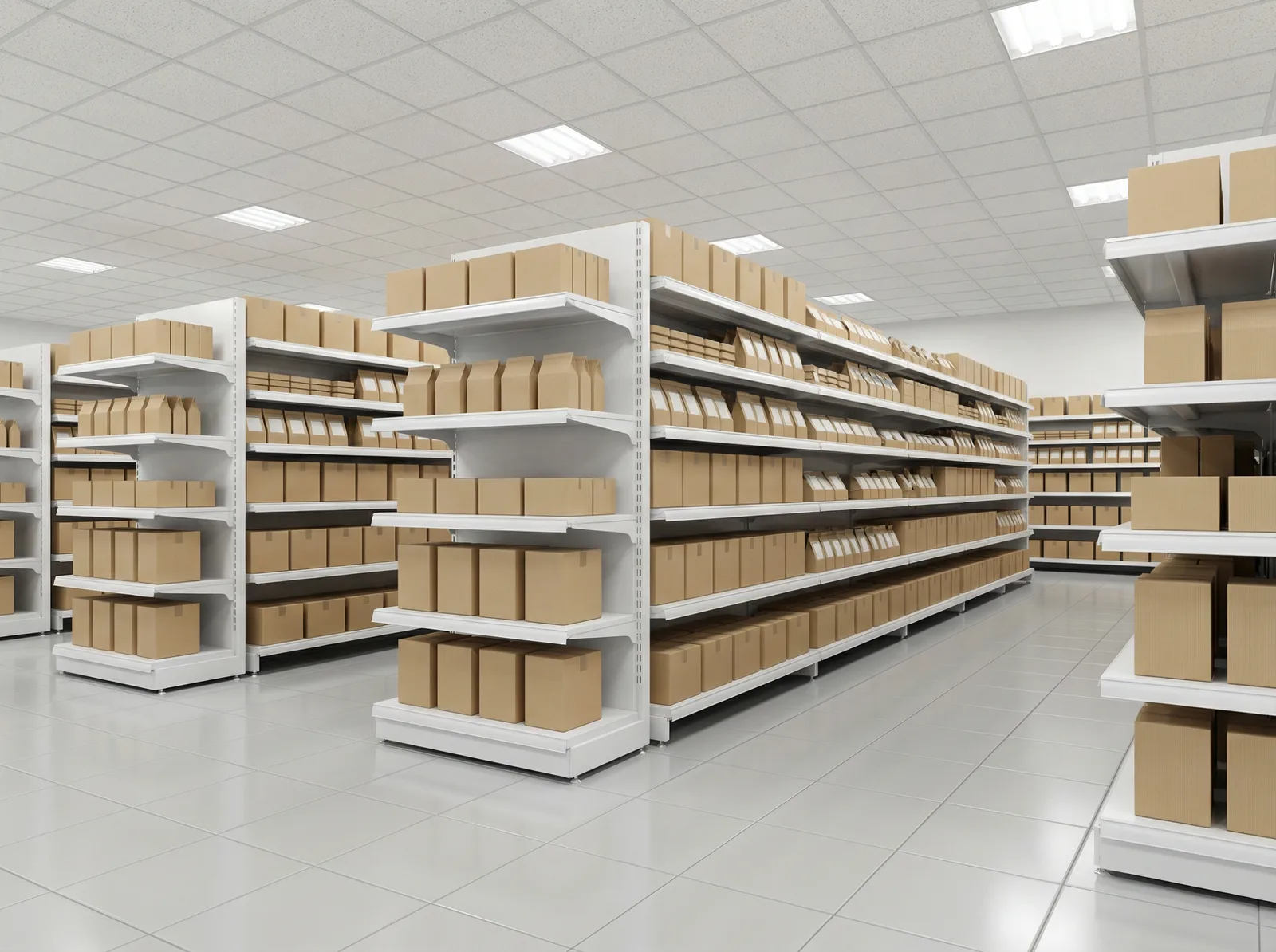
Gondola shelving is the steel island and wall shelving that carries your packaged goods: double-sided runs down the middle of the floor, single-sided runs on the perimeter. A typical gondola buildout is 8 sections, with the middle half of stores running from 4 to 14. 73% of the units convenience stores buy are 54 inches tall, the height that keeps the cashier's sightline open across the store.
Pros
Cons
Best for: Snacks, drinks, grocery, automotive, health and beauty, end-cap promotions
Price range: Varies by height, depth and section count; live pricing on every unit
Our verdict: Buy gondola first and lay everything else out around it. Start from the data-backed defaults: a median of 8 sections; 54 inches tall (73% of units), 48 inches long (84%) and 16 inches deep on current kits (80%); about 5 upper shelves per section (base shelves are included in the section). Decide on slatwall back color and shelf fencing before you order: 28% and 21% of gondola buildouts include them.
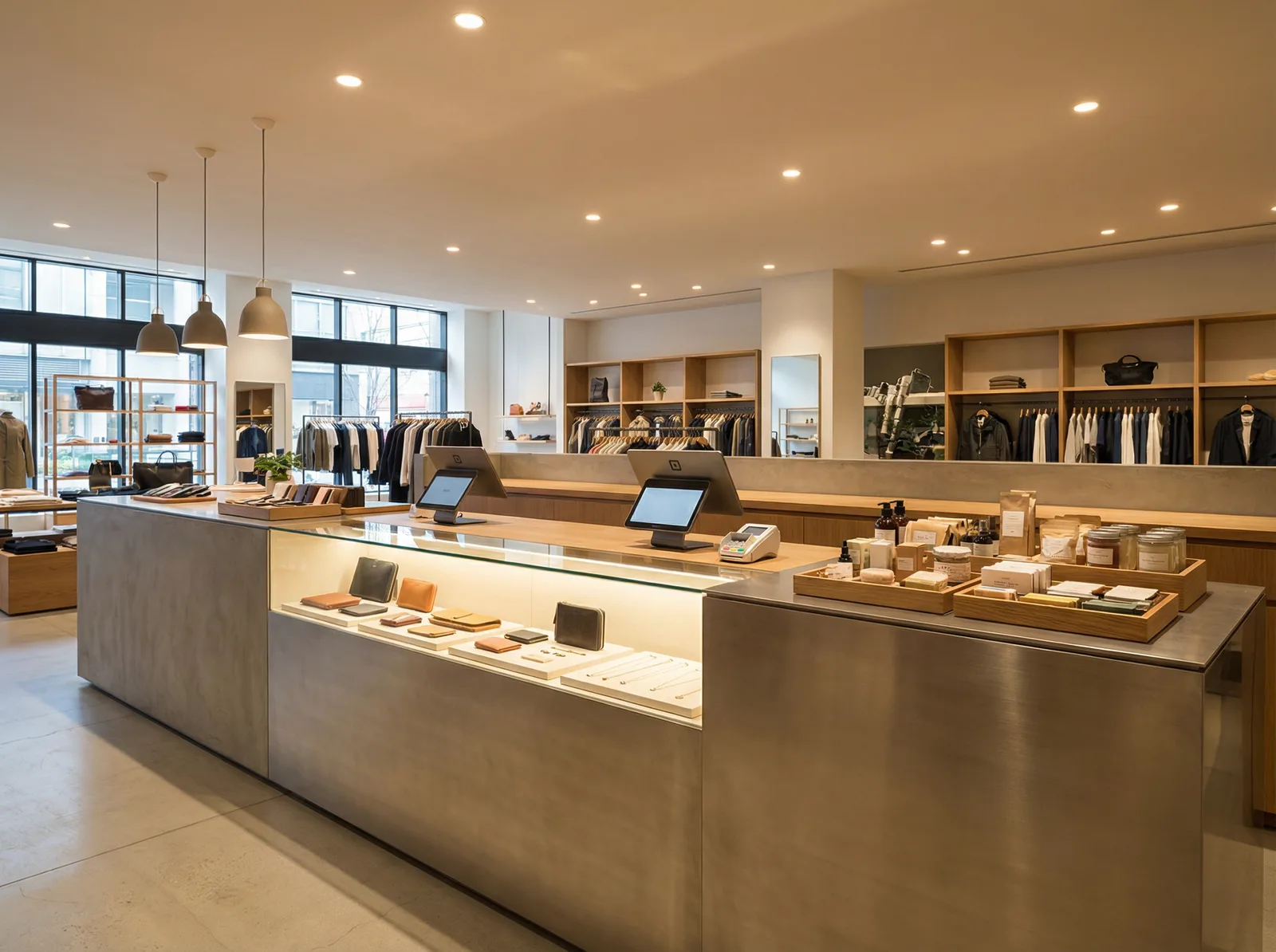
The checkout counter is the register stand and transaction surface where every trip ends. Put it on the entrance axis, cashier facing the door, with 48 to 60 inches of clear aisle at the entrance and register. Only 6% of convenience-store buildouts include a counter from us, so if you inherited one or your fuel-brand program supplies it, treat this as a gap fill, not a must-buy.
Pros
Cons
Best for: Register and POS, bagging, tobacco and lottery adjacency, countertop impulse displays
Price range: Varies by length, finish and register configuration; live pricing on every unit
Our verdict: Stores that buy a counter take a median of 1-2pcs, so plan on one well-placed unit as the starting point. If your fuel or POS program supplies it, put that budget into the countertop displays and showcases that sit on and behind it.
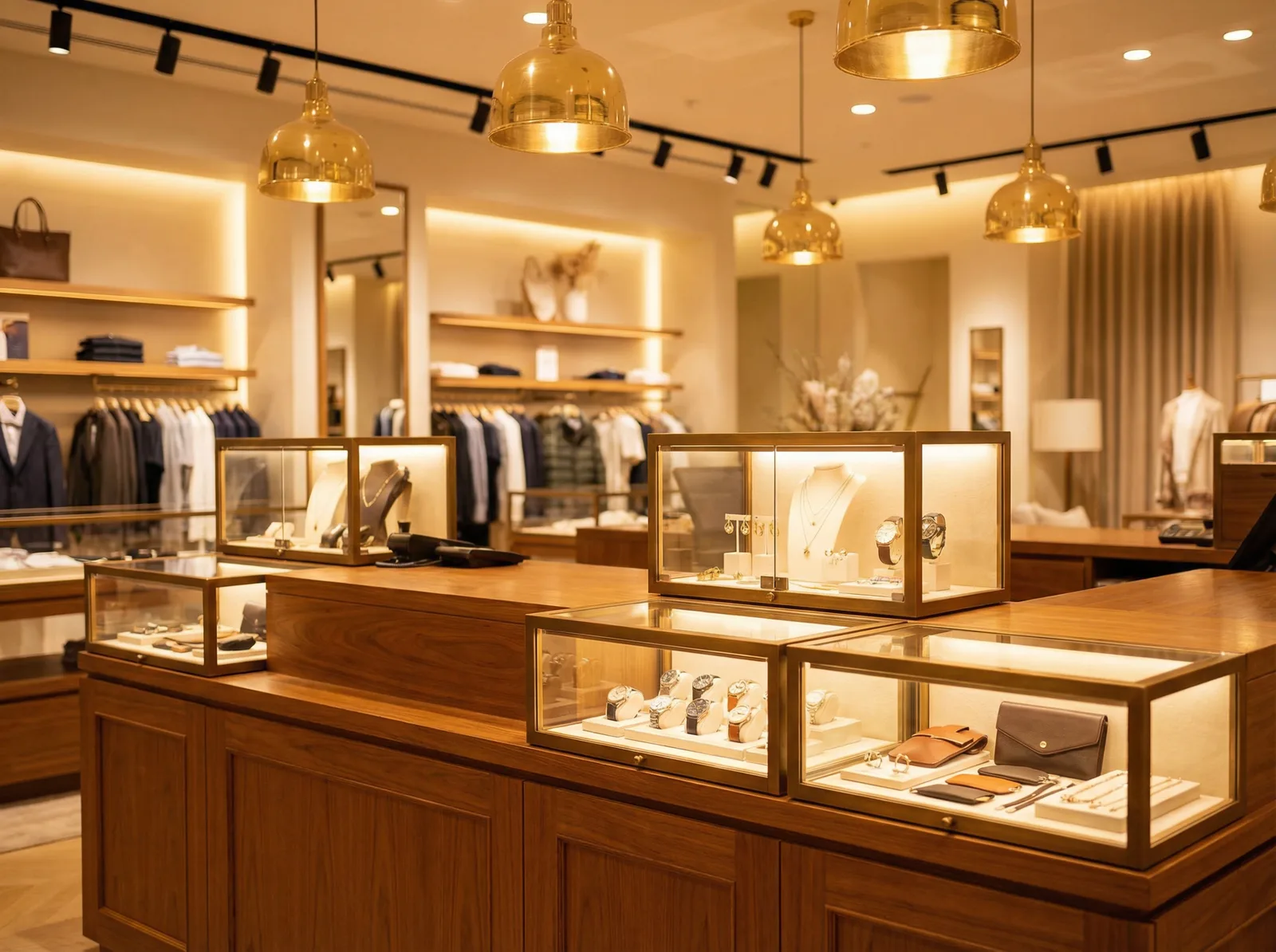
Countertop displays are the small glass cases on the checkout counter that hold grab items next to the register. 36% of convenience-store buildouts include a custom countertop glass display, and those stores take a median of 1. Glass cube displays, built from tempered-glass panels, connectors and bases, appear in 55% of buildouts, more than any other fixture category, with a median of 46 components among the buildouts that buy them.
Pros
Cons
Best for: Lighters, phone chargers, energy shots, candy, small electronics, knives, accessories, anything pocketable
Price range: Varies by size, glass configuration and custom dimensions; live pricing on every unit
Our verdict: Buildouts that buy countertop glass take a median of 2; start there, then match your register count and counter space. For a second impulse system, glass displays are the most common choice in the data, and 12"D x 24"H x 36"L is the top display size in the data at 23.3%. Keep any floor glass displays outside the 48 to 60 inch entrance and checkout clearance.
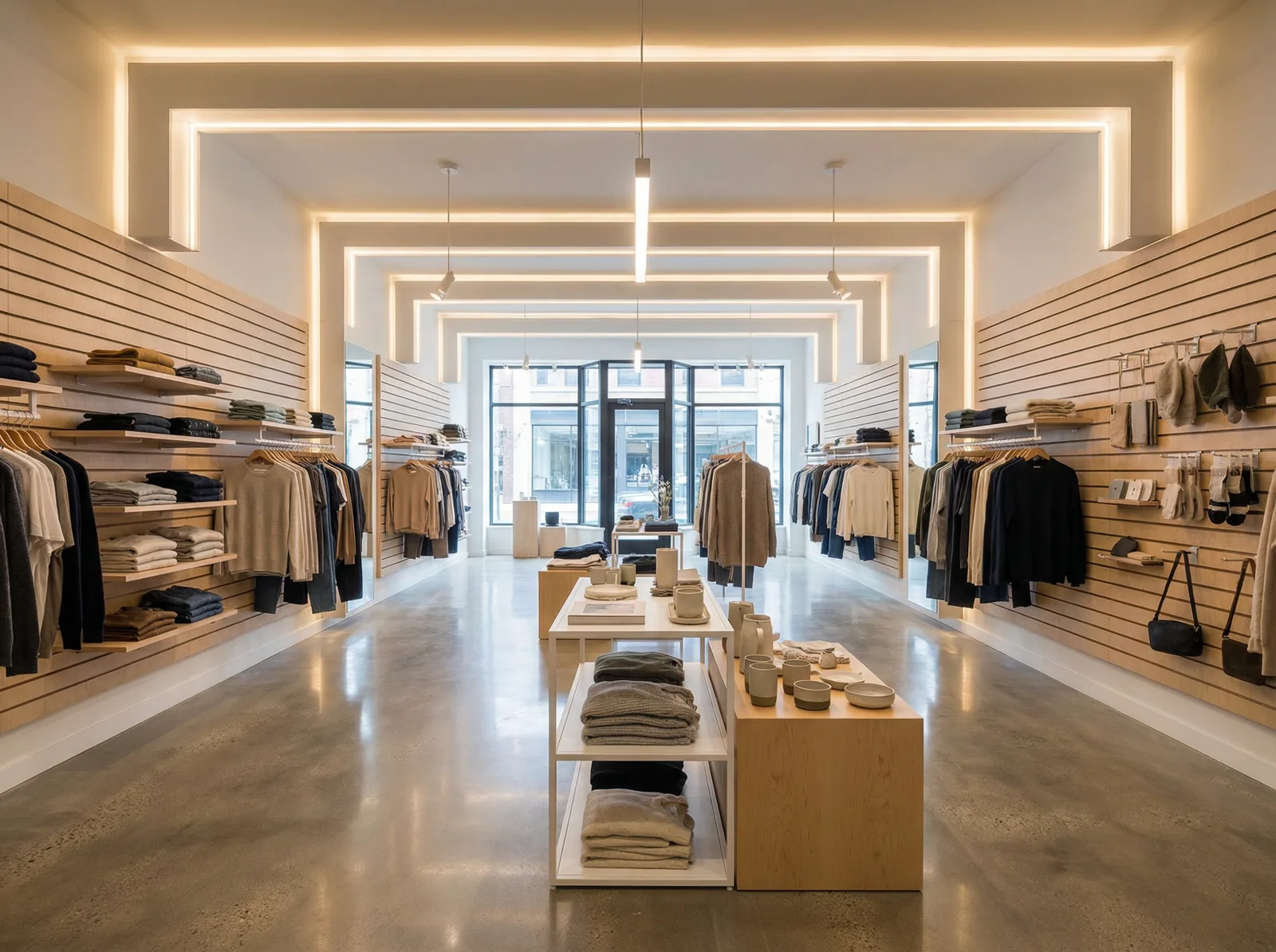
Slatwall is grooved wall paneling that takes hooks, brackets and shelves, turning any blank wall into selling space; 36% of convenience-store buildouts include the 4x8 panels themselves. It goes on every perimeter wall that is not cooler doors, and behind the counter where you hang accessories. 53% of convenience-store buildouts include slatwall panels or accessories, and in recent orders that share is 65%.
Pros
Cons
Best for: Bagged snacks, phone accessories, hats and sunglasses, automotive, the wall is the place for impulse buy items.
Price range: Varies by panel finish, bracket length and hook mix; live pricing on every unit
Our verdict: Slatwall is the default wall system for convenience stores. Order panels to your measured wall footage. Among buildouts that buy each category, the medians are 8 panels and 100 hooks; in recent orders, buildouts that buy 18 glass shelves and brackets take a median of 36. Black is 58.4% of panel quantity. Order all three together so the wall is usable on day one. 12-inch and 10-inch are the lengths that dominate both brackets and hooks and 48" lengths for glass shelves.
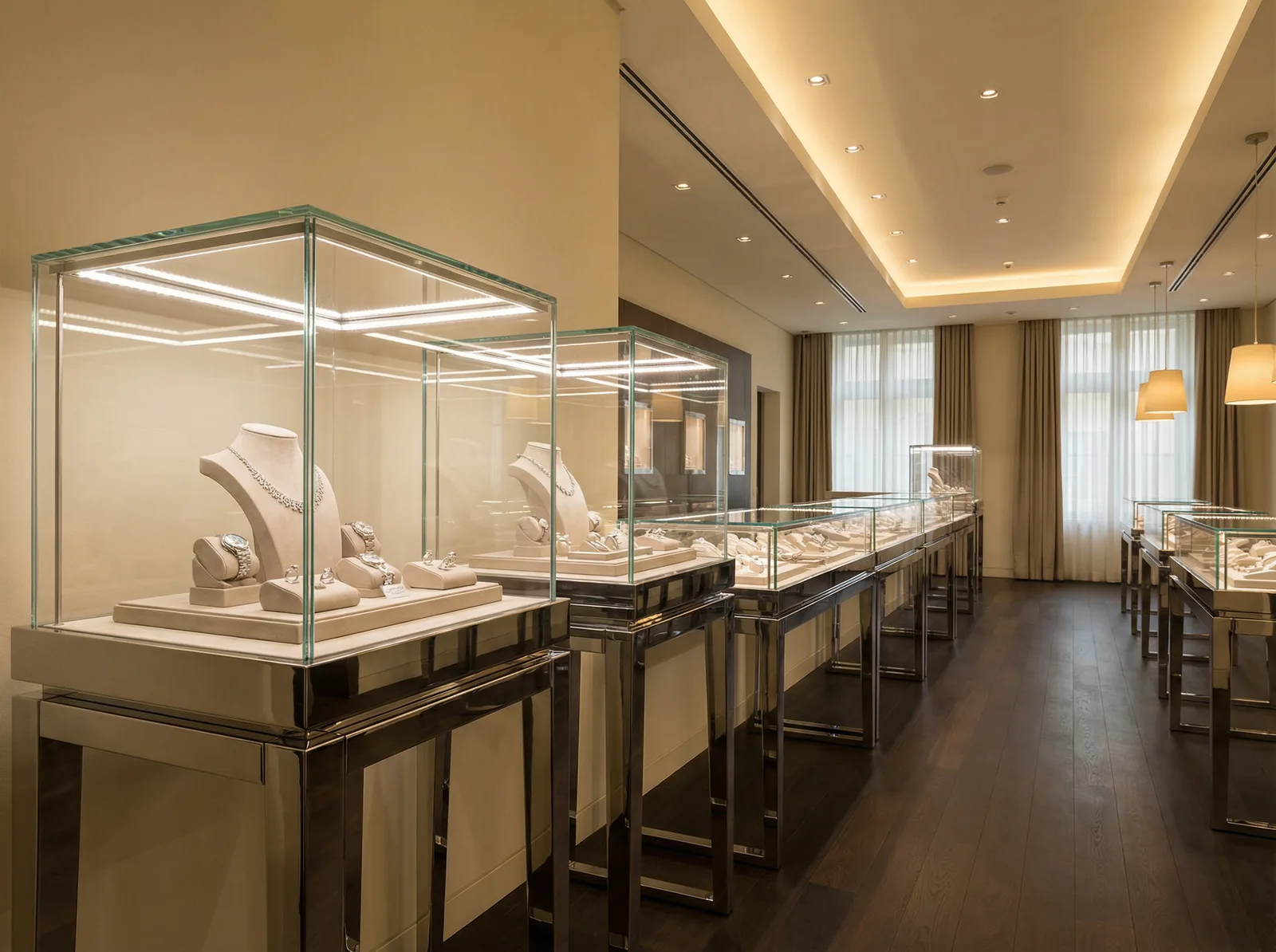
Showcases are lockable floor-standing glass cases, 4 to 6 ft long, for vape, electronics, premium lighters and anything else that walks out the door. They go behind or beside the checkout counter inside the cashier's sightline, with wall and tower cases on the back wall above them. 31% of convenience-store buildouts include a showcase, showcase part or wall case; 13% include a floor showcase and 20% a wall or tower case.
Pros
Cons
Best for: Vape, electronics, premium lighters, perfumes, high-value items, knives, age-restricted products, behind-counter valuables
Price range: Varies by length, full or extra vision, and lighting; live pricing on every unit
Our verdict: Stores that buy showcases take a median of 4, and 54% of units sold are 6 ft, so four 6 ft cases behind the counter is the data-backed default. Add LED at the time of purchase, and consider a wall case if the back wall is free; 32% of showcase invoices also include a wall case.
Shop 5. Glass Showcases & Wall Cases: Lock Up the High-Value Stock →
A typical qualifying buildout, the first order with several store fixture lines. The data-backed defaults: a median of 8 gondola sections, with 73% of gondola units at 54 inches tall; and, among buildouts that buy each category, medians of 8 slatwall panels, 2 countertop glass display and 4 showcases, most of them 6 ft. Plan a phase-two order as well: 53% of customers order again, and among them the median gap from first to second invoice is 60+ days. Set the entrance and checkout path first: 48 to 60 inches at the door and register, 42 to 48 on main aisles, never under 36. Confirm with TABC / local tobacco & lottery rules before you fix the counter layout. Every fixture shows live pricing and ships from our Texas warehouse. Size the aisles from the convenience store gondola shelving page and the gondola shelving buying guide, then send your floor plan for a free layout consultation and an itemized quote.
Total startup cost depends on your lease, licensing, inventory and refrigeration, and we do not publish estimates for those. Fixtures are the line you control: a typical qualifying first order is about 7 line items across two fixture families, such as gondola sections and shelves, slatwall with hooks and brackets, a countertop glass display and showcases, a median of 2-4 among the stores that buy them. Every fixture on our site shows live pricing, so total your exact package before you order, or send your floor plan for an itemized quote.
The core fixture groups: gondola shelving for the aisles, a checkout counter, countertop glass at the register, slatwall for the walls, and locking showcases for anything high-value or age-restricted. In our buildouts glass cube displays appear in 55%, slatwall in 53%, gondola in 43%, custom countertop glass in 36% and showcases or wall cases in 31%. Coolers, beer caves, chip racks and lottery equipment are not in this checklist; place them on the floor plan first, then size the gondola runs around them.
A typical gondola buildout is 8 sections, with the middle half of stores running from 4 to 14, and the median is still 8-12 in orders since 2009. 84% of sections are double-sided islands and 84% are 48 inches long, so plan aisle lengths in 48-inch steps. Then check the floor: each island run needs its own length plus 42 to 48 inches of space between each aisle, so customers can properly browse products.
Put the checkout counter on the entrance axis, cashier facing the door, with 48 to 60 inches of clear aisle at the entrance and register. Run double-sided gondola islands down the middle at 54 inches tall, the height that keeps the cashier's sightline open, with main aisles at 42 to 48 inches and nothing under the 36-inch ADA minimum. Wall runs, slatwall and the cooler doors take the perimeter; showcases and wall cases go behind or beside the counter. Place beer, chips and lottery by your own operating plan; the fixture data does not rank them.
If you sell vape, electronics or anything age-restricted, yes. 31% of convenience-store buildouts include a showcase, showcase part or wall case, and stores that buy showcases take a median of 2, most often 6 ft. Plan tobacco storage behind the register within the cashier's reach, buy purpose-built cigarette displays, and confirm with TABC / local tobacco & lottery rules before you build the back counter.
TX Store Fixtures sells gondola shelving, checkout counters, countertop glass, slatwall and locking showcases online with live pricing on every unit, shipping from our Texas warehouse. We have supplied 615 convenience stores and gas stations since 2009. Send your floor plan for a free layout consultation and an itemized fixture quote.
 Free Freight on Orders $1,999+
 15+ Years Experience